Labor Planning System for Multi-Unit Restaurant Operations
Designed and launched a labor planning system that standardized scheduling and labor modeling across a multi-unit resort food & beverage operation, covering 20 outlets and enabling managers to plan staffing for a workforce of 400-600 employees during peak season.
The problem
The Situation
Ahead of the 2025–2026 winter season, the focus was on improving labor efficiency while maintaining service standards across a large, multi-unit operation.
At the same time, managers across the organization were building schedules independently. This made it difficult to maintain consistency, and labor issues were often identified after schedules had already been published, leaving limited ability to adjust for overscheduling or overtime.
Core Issues
What I owned
System Design
Designed a full labor planning framework, including process logic, validation flows, staffing controls, and an adoption structure across all outlets.
Tooling
Developed the labor planning model, centralized scheduling templates, reporting tools, and validation mechanisms used by admins and leadership.
Rollout & Adoption
Trained managers, chefs, admins, and senior leadership, and implemented accountability and retraining workflows to drive adoption.
How the system worked
The labor planning system connected finance forecasts, staffing models, schedule creation, validation, and payroll into one repeatable operating flow.
Finance Forecast
- Revenue projections
- Room night forecasts
- Skier visit forecasts
Labor Budget Model
- Outlet labor budgets
- Role-based staffing requirements
- Pay rate assumptions
Labor Guideline Tool
- Automated staffing calculations
- Labor cost projections
- Budget validation flags
Manager Scheduling
- Weekly schedules built in Workday
- Managers assign staff to shifts
- Guideline model used for planning
Admin Validation
- Centralized schedule review
- Budget compliance validation
- Schedules approved or returned
Monitoring & Payroll
- Overtime risk reports
- Open shift availability reports
- Payroll approvals
Labor planning model
Decision-support engine
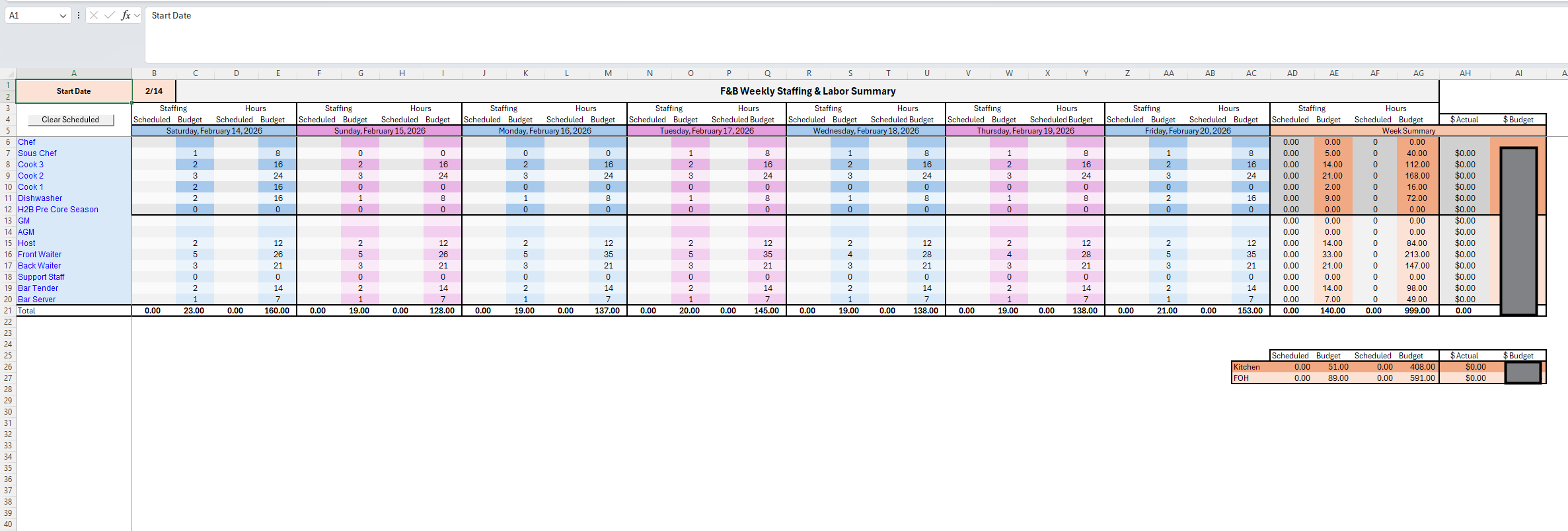
The core tool was an Excel-based labor planning engine built from summer budget assumptions. Managers entered the payroll week start date and the model automatically generated staffing guidance, labor hours, and projected spend.
Centralized templates and SOPs

Centralized Template Directory
Managers across 20 outlets accessed standardized scheduling templates from a centralized directory. This ensured every outlet used the same framework when building schedules.
Scheduling Standard Operating Procedure
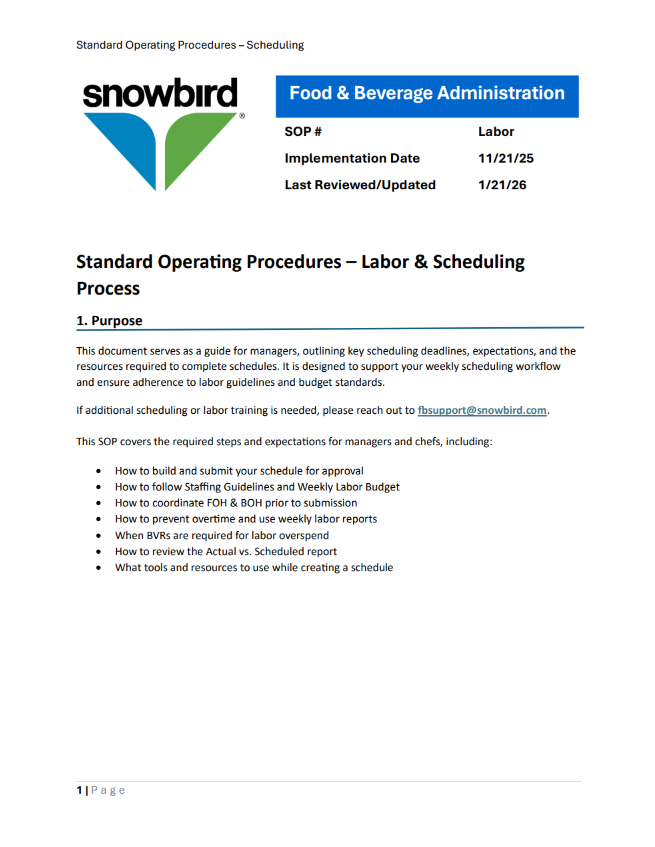
The scheduling SOP defined submission deadlines, validation steps, escalation rules, and accountability workflows. This ensured schedules followed the labor framework before being approved.
Weekly operating rhythm
Schedule submission
Managers submit schedules in Workday for approval.
Leadership alignment
Senior leadership helps fill staffing gaps and align labor to outlet needs.
Admin validation
Admins run schedule validation and send approvals or correction requests.
Final publishing
Approved schedules are finalized and published to staff.
Implementation and adoption
Rollout timeline
Change management
What changed
Significant labor savings compared to budget
Outlets aligned to one planning framework
Managers and chefs trained on the system
Mid-season adoption across the department
Operational impact
Before the system
Labor decisions were inconsistent, reactive, and hard to govern across outlets.
After the system
The department operated with a shared planning system tied directly to labor targets.