Commerce Systems Modernization for Multi-Unit Hospitality
Led a full commerce systems modernization for a multi-location hospitality food & beverage operation, transitioning from InfoGenesis (IG) to Square POS. The rollout included pilot testing, deployment in high-volume event environments, operational readiness planning, and structured post-launch support to standardize commerce systems across 20 outlets.
Alongside this work, we transitioned our inventory system to Yellow Dog with a similar scope and deployment model. This case study focuses on the POS rollout.
Project Overview
Legacy systems created operational friction
A multi-location hospitality food & beverage operation relied on InfoGenesis (IG) as its legacy POS platform. Over time, system limitations created operational friction across restaurants, bars, and seasonal venues.
Workflows varied between locations, reporting was inconsistent, and outlet teams lacked a modern system to support high-volume service and large-scale events.
I led the transition to Square POS, coordinating rollout strategy, operational readiness, vendor collaboration, and training to support adoption across 20 outlets.
Transformation at scale
Why this was difficult
Seasonal timing
System transitions could not happen during peak operational periods, so rollout timing had to align with slower windows while still supporting major upcoming events and menu changes.
Operational inconsistency
Many procedures were undocumented or handled differently between outlets, which made it difficult to define clean standard workflows for the new system.
Change resistance
Staff were used to working a certain way. Adoption required not just training, but also cultural change, stronger support, and tighter operational follow-through after go-live.
What I owned
Project lead across planning, rollout, and support
Owned the implementation process end to end, from early planning and vendor coordination through hardware procurement, configuration, rollout sequencing, training, and post-launch support.
How the rollout was structured
The rollout moved from smaller proof-of-concept pilots to a high-volume event deployment, then expanded across the rest of the resort before finishing with Snowbird’s fine-dining outlet.
Pilot validation
Three pilot outlets were used to validate menu configuration, checkout flows, hardware setup, and real-world service operations before broader rollout.
Large-Scale Event Deployment
After the pilot proved stable, the system was deployed during a major seasonal festival. The event served as the first full-scale operational rollout and stress test for the new POS platform.
Resort-wide rollout
Following the successful event deployment, the platform was rolled out across the remaining food and beverage outlets, standardizing systems across the operation.
Complex Venue Go-Live
The final outlet to transition was a high-complexity fine dining venue, completing the full migration to Square POS.
Oktoberfest as the first major stress test
Large-scale live environment
Oktoberfest served as the first large-scale operational validation of the new POS platform. By this stage, pilot outlets had confirmed system stability, and the event provided a real-world test of performance under sustained high-volume service conditions.
.jpg)
How cross-functional alignment worked
Weekly coordination structure
What had to be ready
Adoption across teams
Managers
All food and beverage managers were trained first on system use, rollout expectations, and outlet readiness.
Frontline staff
Frontline teams were trained on live POS workflows across restaurants, bars, and quick service locations.
Seasonal event hires
Large seasonal groups, including Oktoberfest staff, received fast onboarding and support to operate in live service.
Internal support teams
IT and internal support teams received guides so they could better understand the system and support issues after launch.
Centralized ticketing and triage
Operational issue intake
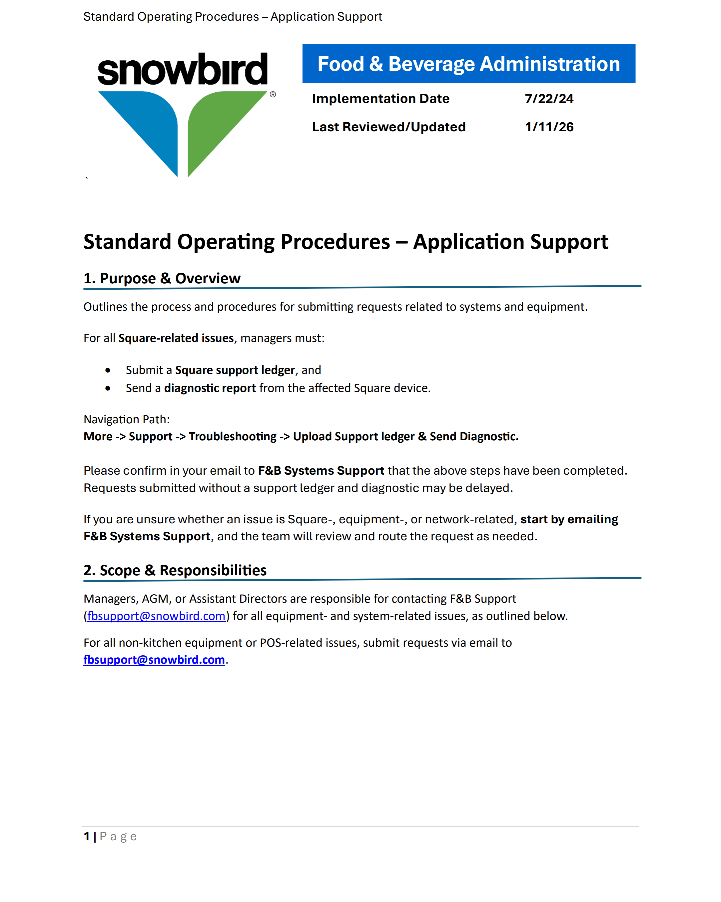
To make support easier after rollout, I created a centralized email address that managers used to submit tickets. The admin team shared access to the inbox and could help review, triage, and route issues faster.
What improved
Outlets transitioned onto a more modern and standardized commerce platform
Staff trained across managers, frontline teams, and seasonal event hires
Devices configured for Oktoberfest alone
Peak transaction volume supported during one of Snowbird’s largest event environments
Before vs after
Legacy systems and fragmented workflows
Operations teams worked across inconsistent processes that were harder to support and scale.
Modernized systems with clearer support
The department had a more scalable platform that was easier to operate, train, and support.
What this project reinforced
Large operational system implementations succeed when technology is aligned with real workflows and supported by structured rollout planning. Pilots, event-scale deployment, training, and strong post-launch support made the transition durable rather than temporary.